
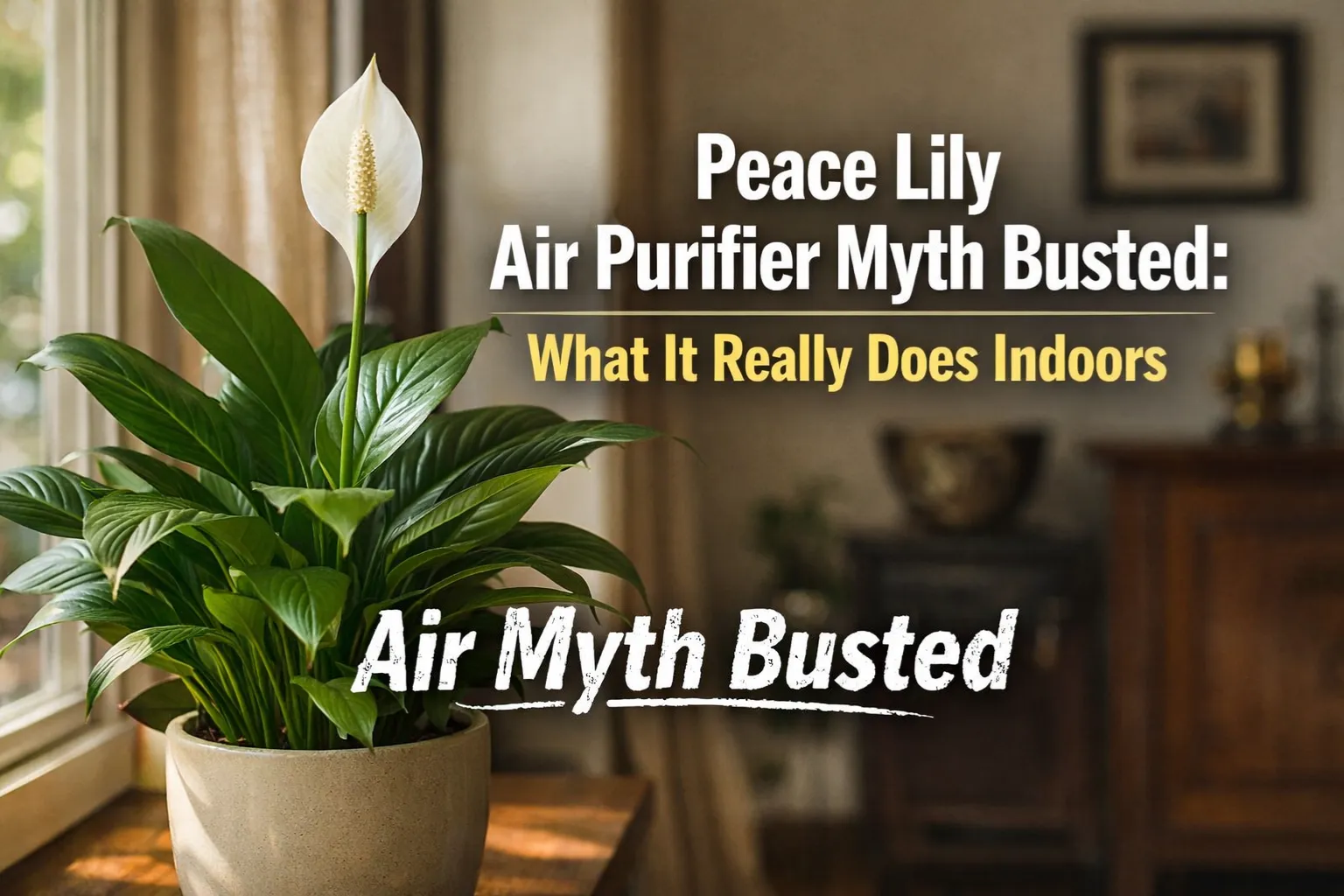
Peace Lily Air Purifier Myth Busted: What It Really Does Indoors
Introduction
If you’ve ever searched for air purifying plants indoor, chances are the Peace Lily showed up at the top. It’s often marketed as a natural air cleaner that can make your home healthier just by sitting in a corner.
But here’s the real question: is your Peace Lily actually cleaning your air, or is it just a beautiful myth we all believe?
Let’s break it down honestly.
Quick Answer
Peace Lily does not significantly purify indoor air in real-life home conditions. While it can absorb small amounts of toxins in lab settings, the effect is too minimal to impact your indoor air quality meaningfully.
What the Peace Lily Actually Does Indoors
1. The NASA Study – Misunderstood
Most claims come from the famous NASA air purifying plants study. In controlled lab environments, plants like Peace Lily removed toxins like benzene and formaldehyde.
But here’s the catch:
Those tests were done in sealed chambers
Real homes have airflow, open spaces, and pollution sources
So the results don’t translate directly to your living room.
2. Real-Life Air Cleaning Power
To actually purify air effectively, you would need:
50–100 plants per room
Extremely low ventilation
Which is clearly impractical.
So no, your single Peace Lily near the window isn’t acting like an air purifier machine.
3. What It Does Do Well
Even though it doesn’t clean air significantly, Peace Lily still has real benefits:
Adds humidity to dry indoor air
Improves mental well-being
Enhances room aesthetics
Can slightly reduce dust levels
These benefits are subtle but real.
Spider Plant vs Snake Plant vs Peace Lily
When comparing popular plants:
Spider Plant: Often asked — “Do spider plants purify the air from mold?”
Truth: No strong scientific evidence for mold removal.
Snake Plant: People ask — “Do snake plants clean the air?”
Truth: Minimal impact in real homes, similar to Peace Lily.
Peace Lily: Slightly better in lab toxin absorption, but still not effective indoors.
Conclusion:
All are great decor plants, not true air purifiers.
Myth vs Reality
Myth: Peace Lily can replace an air purifier
Reality: It cannot compete with HEPA air purifiers
Myth: One plant is enough to clean a room
Reality: You’d need dozens for measurable impact
Myth: NASA proved plants purify indoor air
Reality: NASA tested in controlled lab conditions, not homes
Practical Solutions for Cleaner Indoor Air
If your goal is truly cleaner air, here’s what actually works:
1. Use Real Air Purifiers
HEPA filters remove dust, pollen, and pollutants effectively.
2. Improve Ventilation
Open windows daily to allow fresh air circulation.
3. Combine Plants with Good Habits
Keep Peace Lily for aesthetics and mental health, not filtration.
4. Choose Safe Plants
If you have pets, search for air purifying plants safe for cats before buying. Peace Lily is toxic to pets, so be cautious.

Written by Editorial Staff Editor
This article was rigorously researched and compiled by our expert editorial team.