Why Your Indoor Plants Keep Dying (Biggest Plant Care Mistakes Revealed)
INTRO
It starts the same way every time.
A fresh plant. Bright green leaves. Good vibes.
Then… slowly… something changes.
Leaves turn yellow. Soil smells weird. Growth just stops.
And suddenly you’re asking why are all my plants dying at the same time?
Yeah. Been there.
Truth is, it’s usually not bad luck. Not even your fault fully.
It’s small mistakes. Repeated quietly.
QUICK ANSWER
Indoor plants usually die due to overwatering, poor light, and wrong soil conditions. Fix the roots first, adjust watering habits, and give proper indirect sunlight to revive them.
It’s Not Death. It’s Slow Decline.
Plants don’t just die overnight.
They fade.
You might notice:
- Leaves turning yellow or brown
- Mushy stems
- No new growth (this one hurts)
At first, you try to fix it quickly. Water more. Move it around. Maybe even add fertilizer.
But that’s where things go wrong.
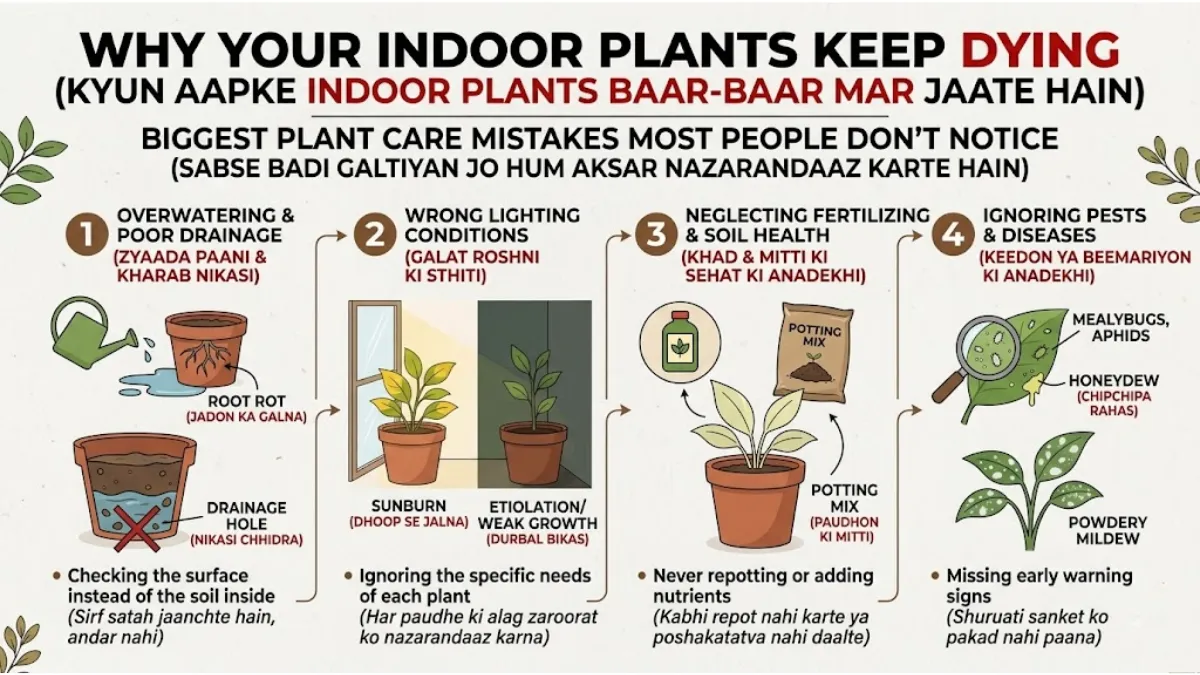
Mistake #1: Overwatering (The Silent Killer)
This one… almost everyone does.
You think more water more love.
But roots need oxygen too. When soil stays wet all the time, roots suffocate. Then rot starts.
That weird smell from soil? Yeah. That’s trouble.
If you’re wondering how to save dying plants indoor, start here:
Check soil before watering. Always.
Mistake #2: Wrong Light (Too Much or Too Little)
Plants aren’t all sun lovers.
Some need bright indirect light. Some survive in low light. But none like extreme changes.
Direct harsh sunlight? Burns leaves.
Too dark corners? No growth at all.
It’s about balance. Not guessing.
Mistake #3: Ignoring the Roots
We focus on leaves. Always.
But roots tell the real story.
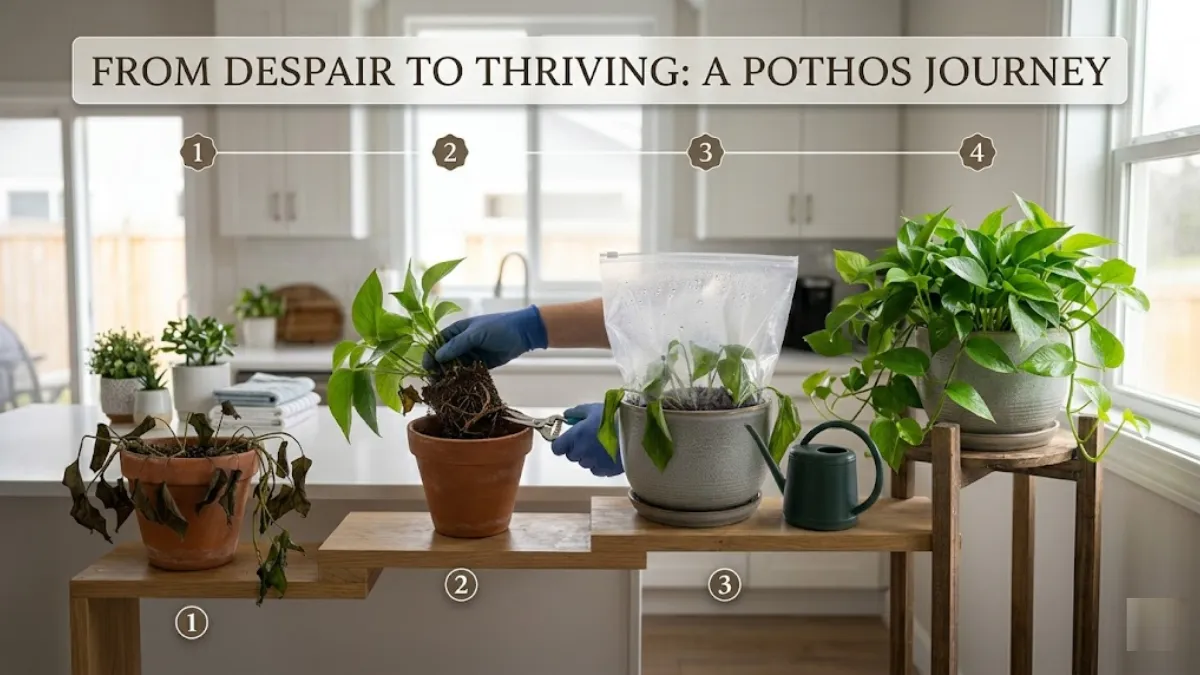
Once, I removed a dying plant from its pot. Looked fine from top.
Below? Black, mushy roots.
That’s when I tried something simple.
The Simple Trick That Actually Works
Not complicated. Not expensive.
Just hydrogen peroxide.
Mix:
- 1 part hydrogen peroxide
- 2 parts water
Pour into soil slowly.
It helps add oxygen, kills bacteria, and gives roots a second chance.
This method is honestly one of the easiest home remedies for dying plants.
And yes… it works faster than you expect.
Mistake #4: Doing Too Much Care
This one sounds weird. But it’s real.
Too much watering.
Too much moving.
Too much checking.
Plants don’t like constant disturbance.
Sometimes… just leave them alone.
Mistake #5: Wrong Plant for Your Home
Not every plant suits every home.
Humidity, light, temperature everything matters.
If you’re a beginner, go for:
- Snake plant
- Pothos (money plant)
- ZZ plant
These are among the top 10 indoor plants that actually survive mistakes.
Choosing suitable indoor plants makes everything easier.
What About Outdoor Plants Dying?
Different story.
If you’re thinking why are my outdoor plants dying, check:
- Too much sun exposure
- Poor drainage
- Pest attacks
Outdoor plants deal with harsher conditions. Indoor ones… mostly suffer from us
Spiritual Meaning of Plants Dying (Quick Thought)
Some people believe plants absorb negative energy.
And when they die… it reflects imbalance.
Maybe. Maybe not.
But one thing is clear plants respond to environment. Physical or emotional, both matter in a way.
MYTH VS REALITY
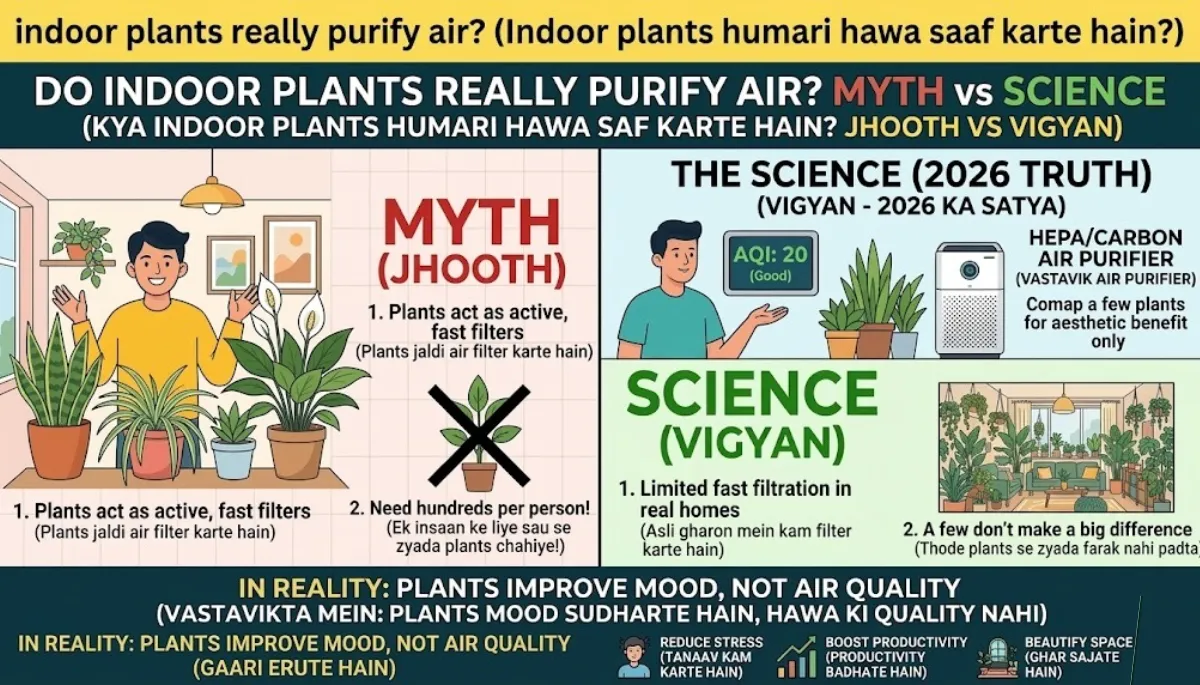
Myth: Water daily to keep plants healthy
Reality: Overwatering kills faster than underwatering
Myth: Dead leaves will turn green again
Reality: Once damaged, they don’t recover
Myth: Fertilizer fixes everything
Reality: Weak roots can’t absorb nutrients
PRACTICAL SOLUTIONS (That Actually Help)
- Check soil before watering (top 2 inches rule)
- Use pots with drainage holes
- Give bright, indirect sunlight
- Trim dead or yellow leaves
- Try hydrogen peroxide treatment once
- Don’t panic… give it time
Consistency matters more than perfection. Always.
INTERNAL LINKING (Recommended Reads)
- Easy Indoor Plants That Don’t Die Easily
- Signs You Are Overwatering Your Plants

Written by Editorial Staff Editor
This article was rigorously researched and compiled by our expert editorial team.