Why Your Indoor Plants Keep Dying (Biggest Plant Care Mistakes Most People Don’t Notice
Quick Answer
Most indoor plants die because of overwatering, poor light, wrong soil, or sudden environment changes.
The good news? Many “dying” plants are actually recoverable if the mistake is fixed early
Introduction
It starts the same way for almost everyone.
You bring home a beautiful plant. Water it carefully. Place it near a window. Maybe even talk to it a little.
And then…
Leaves turn yellow. Tips dry. Growth stops.
Soon you’re wondering:
Why are all my plants dying at the same time?
Here’s the truth it’s rarely bad luck. It’s usually one small habit repeated daily without realizing it.
Let’s fix that today.
Why Your Indoor Plants Keep Dying (Main Reasons Explained Simply)
Most plant problems come from just a few common mistakes.
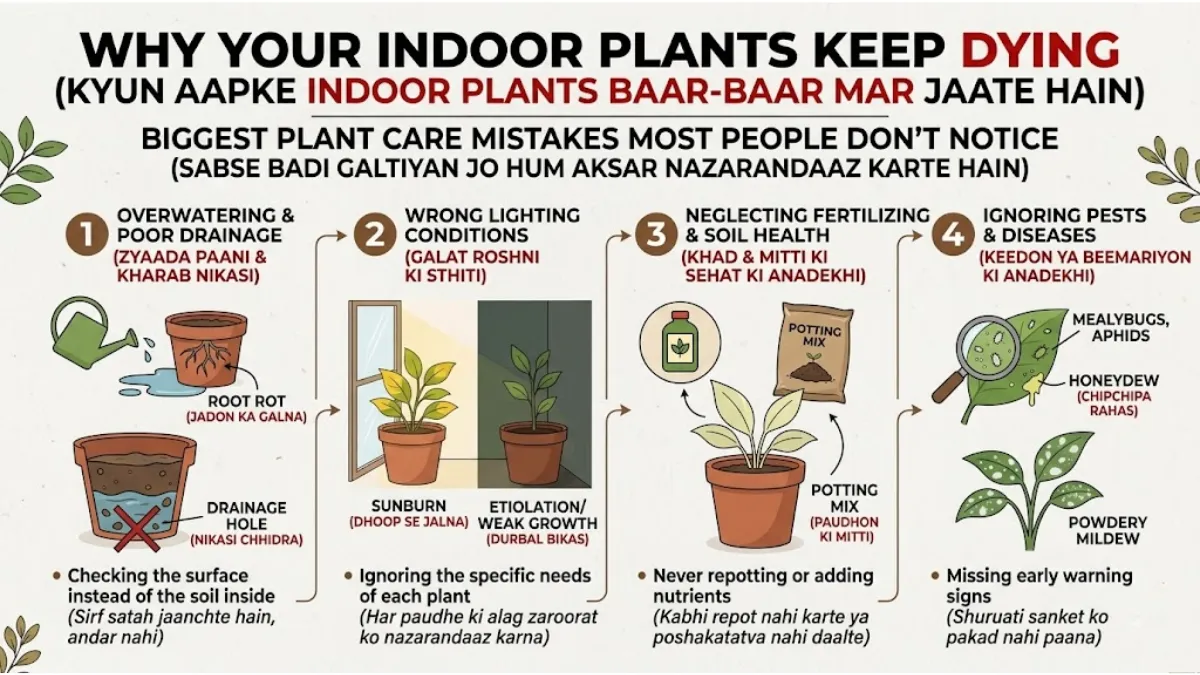
1. Overwatering (The #1 Hidden Killer)
People water plants out of love.
But roots need oxygen too.
Signs of overwatering:
- yellow leaves
- soft stems
- fungus smell in soil
- leaves dropping suddenly
If soil stays wet for days, roots slowly suffocate.
2. Wrong Light Placement
Indoor plants don’t all need the same light.
Common mistake:
Putting every plant near the same window.
Example:
Snake Plant tolerates low light
Money Plant prefers indirect light
Peace Lily dislikes harsh sun
When light is wrong, plants slowly weaken.
3. Using the Wrong Pot Without Drainage
No drainage hole trapped water.
Even healthy plants struggle in decorative pots without airflow at the roots.
Always check the base of the pot first.
4. Sudden Temperature Changes
Plants dislike surprises.
Common causes:
- AC airflow
- heater exposure
- moving plants frequently
- balcony to bedroom shifting
Consistency matters more than people think.
Why Are All My Plants Dying at the Same Time?
If multiple plants decline together, the reason is usually environmental.
Check these first:
- watering routine changed recently
- weather shift (season change)
- low sunlight during winter
- new fertilizer added
- pest spread from one plant to others
Indoor plants react quickly to routine changes.
Myth vs Reality: Indoor Plant Care Mistakes
Myth
More water helps plants recover faster
Reality
Too much water causes root rot the most common reason houseplants die
Myth
Plants grow anywhere inside the house
Reality
Each plant has different light needs
Myth
Dead-looking leaves mean the plant is gone
Reality
Many plants recover if roots are still alive
How to Save Dying Plants Indoor (Simple Rescue Steps)
If your plant still has some green stems, it can often recover.
Try this rescue routine:
Step 1: Check soil moisture
If wet stop watering immediately
Step 2: Move to bright indirect light
Step 3: Remove damaged leaves
Step 4: Ensure drainage hole exists
Step 5: Repot if roots smell bad
Most plants respond within 7,14 days after correction.
Yes, really.
Home Remedies for Dying Plants That Actually Help
You don’t need expensive products.
Try these simple fixes:
Add fresh soil if old soil feels compact
Spray neem water if pests appear
Keep plants near morning sunlight
Wipe dusty leaves weekly
Reduce watering during winter
Small corrections bring big improvement.
Spiritual Meaning of Plants Dying (What People Often Feel)
Many readers quietly wonder this.
Some believe plants absorb negative energy or reflect emotional changes at home.
There’s no scientific proof of this.
But plants do react strongly to environment, stress, and routine changes around them.
So when plants struggle, it’s often a signal to check lighting, airflow, watering — not luck or fate.
Still, caring for plants mindfully creates a calmer living space.
And that part is very real.
When Is It Too Late to Revive a Plant?
Check these signs:
If stems are green inside → plant alive
If roots are firm → plant recoverable
If base still strong → new leaves possible
But if roots are black, mushy, and smell rotten…
Recovery becomes difficult.
Still worth trying once.
Plants surprise us often.
Practical Solutions: How to Prevent Plant Death in the Future
Follow this simple routine:
Water only when top soil dries
Keep plants near indirect sunlight
Use pots with drainage holes
Rotate plants every 10 days
Avoid over-fertilizing
Consistency saves more plants than anything else.
Internal Linking Suggestions (IndoorPlantify)
Add these helpful guides:
- 5 Signs Your Indoor Plant Is About to Die (Save It NOW!)
- Best Low-Maintenance Indoor Plants for Beginners
- Snake Plant Care Guide for Indian Homes

Written by Editorial Staff Editor
This article was rigorously researched and compiled by our expert editorial team.