Can Your Indoor Plant Recover Without Growing New Leaves? The Truth Might Surprise You
INTRO
You water it. You move it closer to light. You even talk to it sometimes.
Still… nothing.
No new leaves. No visible growth. Just a plant sitting there, almost frozen in time.
And that thought hits Is it already dying?
Here’s the thing most people don’t realize: plants don’t always show recovery the way we expect. And yeah, it can be confusing. Frustrating too.
Let’s clear this up.
QUICK ANSWER
Yes, indoor plants can recover without immediately growing new leaves.
Sometimes recovery starts underground in the roots before anything visible happens.
No leaves doesn’t always mean no hope.
What Recovery Actually Looks Like (Not What You Think)
A few months ago, I had a peace lily. Completely still. No new leaves for weeks. Looked tired.
I almost gave up.
But when I checked the soil… roots were firm. Not mushy. That’s when it clicked the plant wasn’t dead. It was healing.
Plants don’t rush.
Signs your plant is recovering (even without leaves):
- Stems are still green or flexible
- Roots feel firm, not slimy
- No foul smell from soil
- Leaves (even old ones) are not dropping rapidly
Sometimes growth pauses. Especially after stress repotting, overwatering, less sunlight.
It’s like a reset mode.
Why Your Plant Isn’t Growing New Leaves
Let’s be honest. This is where most people panic.
1. Root Recovery Phase
After damage, plants prioritize roots. No roots no future leaves.
2. Low Light Conditions
Even if it's alive, your plant may not have enough energy to push new growth.
3. Overwatering (Most Common Mistake)
Ironically, too much care kills plants.
Wet soil suffocated roots.
4. Seasonal Slowdown
Winters especially. Growth almost stops. Totally normal.
5. Nutrient Deficiency
No nutrients no growth fuel.
Simple.
MYTH VS REALITY
Myth: No new leaves means the plant is dead
Reality: Growth pause ≠ death. Roots may still be active
Myth: Water more to “boost” growth
Reality: Overwatering delays recovery even more
Myth: Fertilizer fixes everything instantly
Reality: Damaged roots can’t absorb nutrients properly
So… When Is It Too Late?
This is the hard part.
A plant is usually beyond saving if:
- Stems are brittle and snap easily
- Roots are black, mushy, and smell bad
- No green anywhere (scratch test fails)
If everything is brown and dry… yeah, chances are low.
But if there’s even a little green, there’s still hope.
PRACTICAL SOLUTIONS (That Actually Work)
Let’s keep this simple. No complicated hacks.
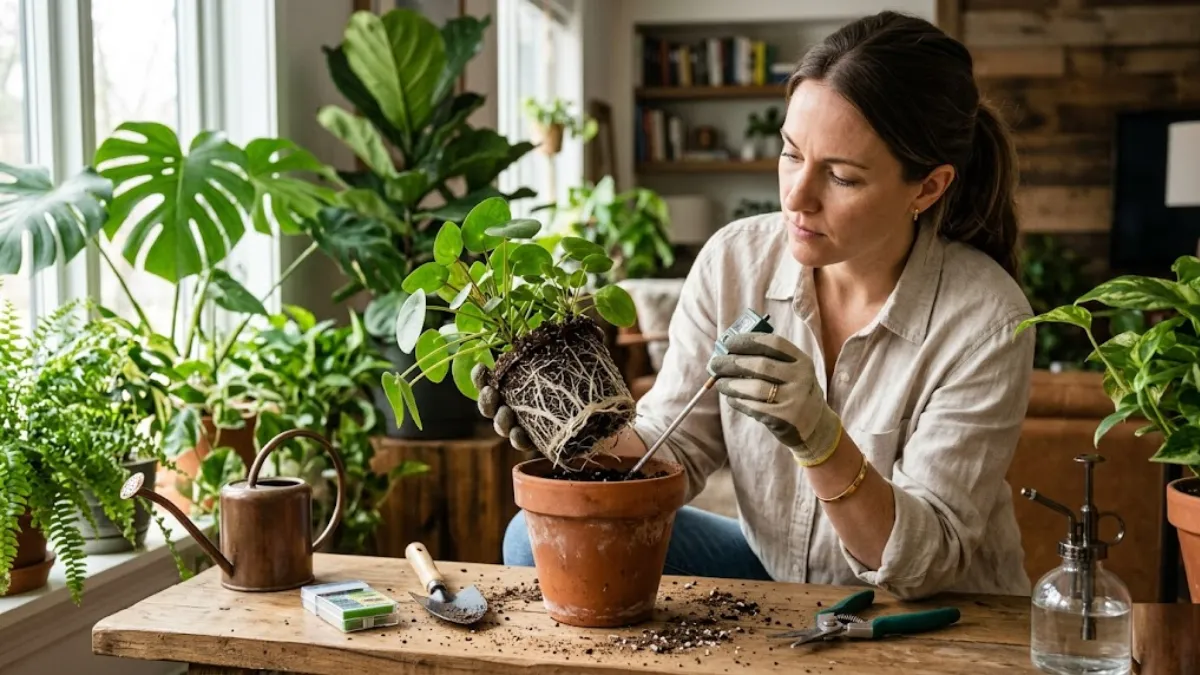
1. Check the Roots First
Gently remove the plant. Look at roots.
- White/cream healthy
- Brown/mushy rot (trim it)
2. Adjust Watering (Less Is More)
Stop watering daily.
Water only when top soil feels dry. Stick your finger in. Old-school method, but works.
3. Give Bright Indirect Light
Not harsh sun. Not dark corners.
A window spot is ideal.
4. Try the “Recovery Pause” Trick
Do nothing for a week.
Seriously. No water, no fertilizer. Let the plant stabilize. This works surprisingly well.
5. Use Water Recovery Method (If Needed)
If roots are damaged:
- Cut healthy stem
- Place in clean water
- Wait for new roots
Yes, some “dead-looking” plants bounce back this way.
A Small Story (Because This Matters)
Someone once told me their plant hadn’t grown for 2 months.
They kept watering it more… thinking it needed help.
Turns out, roots were drowning.
We stopped watering for a few days. Moved it near a window.
Two weeks later… tiny leaf.
Not big. Not dramatic. But enough.
Sometimes recovery is quiet.
INTERNAL LINKING (Recommended Reads)
- How to revive root rot plants step-by-step
- Best low-light indoor plants for Indian homes
- Signs you are overwatering your houseplants

Written by Editorial Staff Editor
This article was rigorously researched and compiled by our expert editorial team.