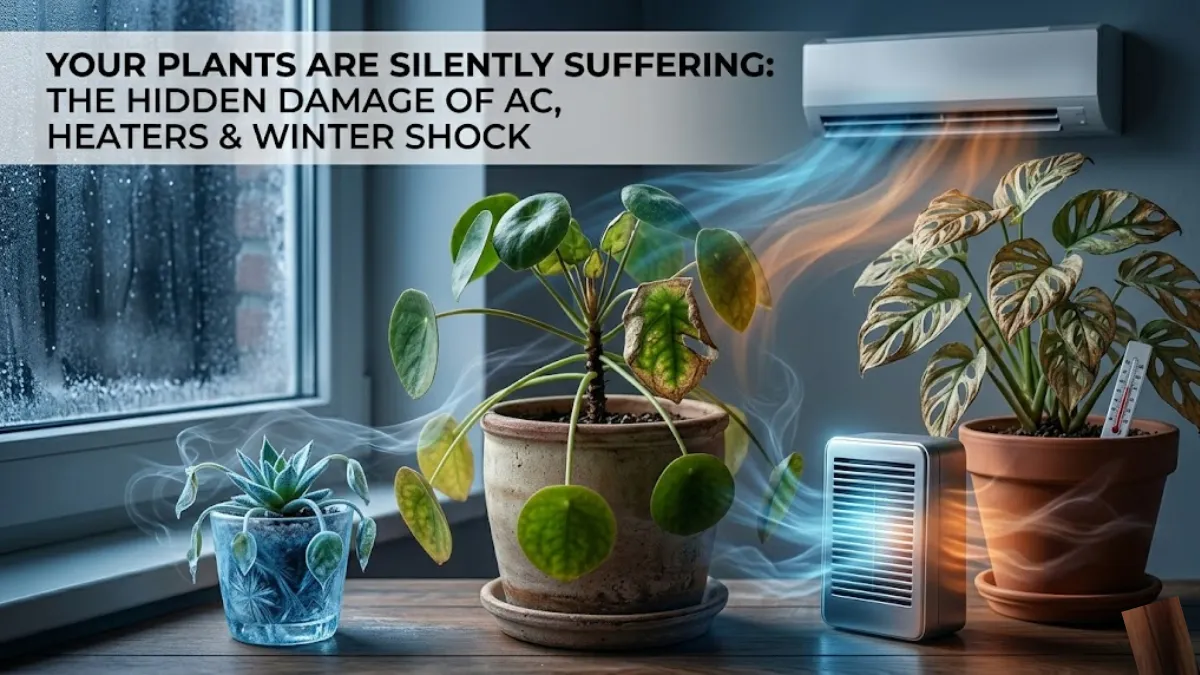
Your Plants Are Silently Suffering: The Hidden Damage of AC, Heaters & Winter Shock
INTRO
You walk into your room. AC humming. Or maybe a heater quietly running in the corner. Feels cozy, right
But your plant? Not so much.
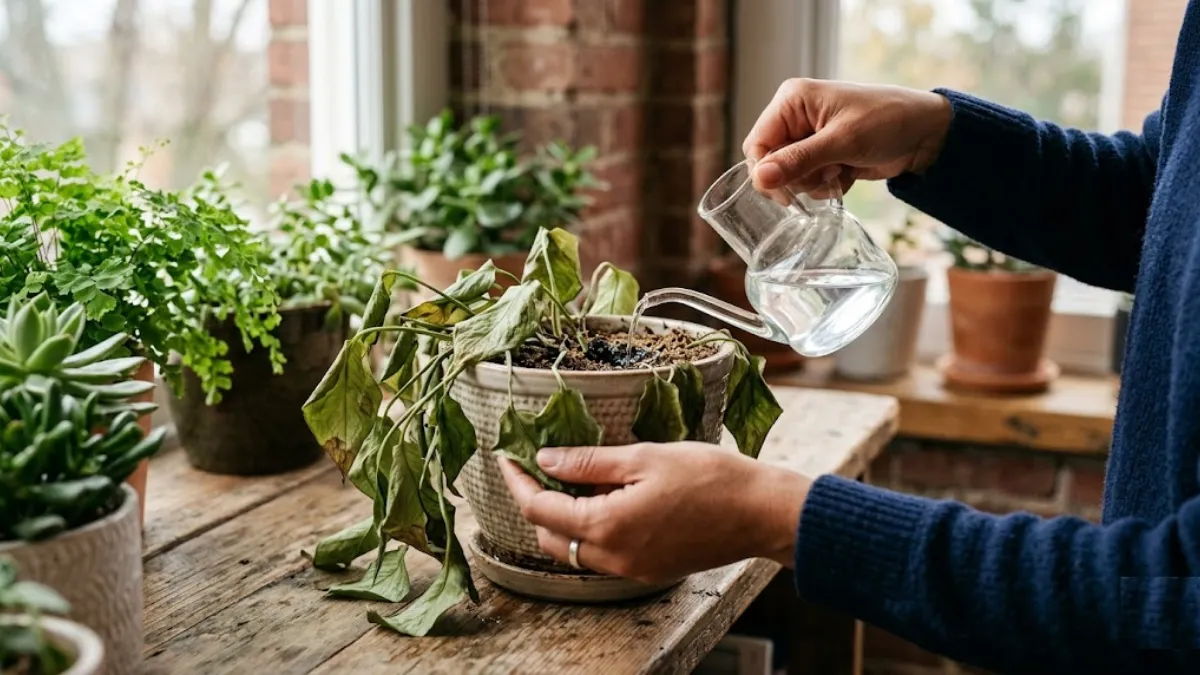
One day it’s fine. Next day droopy leaves, brown edges, sudden sadness. You think it’s watering. Or sunlight. But no… something else is going on. Something most plant parents miss.
Temperature shock. Quiet. Fast. Brutal.
QUICK ANSWER
Temperature shock in indoor plants happens when they face sudden changes like moving from warm to cold or exposure to AC/heaters.
This stress disrupts their natural balance, causing leaf drop, browning, or slowed growth. Stable conditions happy plants.
WHAT IS TEMPERATURE SHOCK IN INDOOR PLANTS?
Plants are sensitive. Like, really sensitive
They don’t like sudden changes. Imagine stepping from a warm room into freezing cold instantly. That shock Plants feel it too
AC vents. Heaters. Cold drafts near windows in winter. All of these create micro-climate shifts inside your home
And your plant just sits there taking it all in
HOW AC, HEATERS & WINTER DAMAGE YOUR PLANTS
1. AC Damage (Yes, even in summers)
Cold air directly hitting leaves = stress.
You might notice:
- Curling leaves
- Dry tips
- Slower growth
Especially common in common household plants like snake plant or peace lily. They survive… but they struggle.
2. Heater Dryness
Heaters don’t just warm the room. They suck moisture out of the air.
Plants that love humidity? They suffer quietly.
Think about houseplants that like misting like ferns or calatheas. Without moisture, they crisp up. Literally.
3. Winter Window Shock
Winter sun looks gentle. But the cold near windows? Not so gentle.
At night, temperatures drop fast. Leaves touching cold glass = damage.
That’s why many indoor plants for the winter need repositioning. Just a few feet away can save them.
REAL STORY (AND A COMMON MISTAKE)
Last winter, someone placed their spider plant near a sunny window. Looked perfect. Bright. Aesthetic.
But every night, cold air seeped in.
Within days—yellow leaves. Sad plant. Confusion.
They increased watering (big mistake). Because they thought dryness was the issue.
But here’s the thing…
Worst time to water plants in winter?
When soil is already cold and damp.
Water just sits there. Roots suffer. Rot begins.
MYTH VS REALITY
Myth: Plants need more care in winter, so water them more
Reality: They need less water. Growth slows. Soil stays wet longer
Myth: AC air is harmless for plants
Reality: Direct airflow stresses leaves and dries them out
Myth: All plants survive indoors easily
Reality: Some plants that should not be inside the house struggle without proper light and airflow
PRACTICAL SOLUTIONS (WHAT ACTUALLY WORKS)
1. Keep Them Away From Direct Airflow
Not under AC vents. Not next to heaters. Simple shift. Big difference.
2. Maintain Stable Temperature
Avoid sudden changes. Don’t move plants frequently between rooms.
Consistency matters more than perfection.
3. Adjust Watering (This is crucial)
In winter, water less. Always check soil first.
Example:
- Wondering how often to water ZZ plant in winter? → Once every 2–3 weeks is usually enough.
Overwatering is more dangerous than underwatering here.
4. Increase Humidity (But gently)
Light misting helps. Especially for tropical plants.
But don’t overdo it. Balance. Always balance.
5. Choose Resilient Plants
If your home has strong AC/heater use, go for tougher options.
Like:
- Snake plant
- ZZ plant
- Spider plant (with proper spider plant care indoors watering)
INTERNAL LINKING (FOR BETTER NAVIGATION)
- Read more: Best Low Maintenance Indoor Plants for Busy People
- Guide: How to Water Indoor Plants Correctly (Season-wise)
- Explore: Top Air Purifying Plants for Indian Homes

Written by Editorial Staff Editor
This article was rigorously researched and compiled by our expert editorial team.