Hydroponic Fodder Systems: The Smart Green Feed Revolution Farmers Are Quietly Switching To
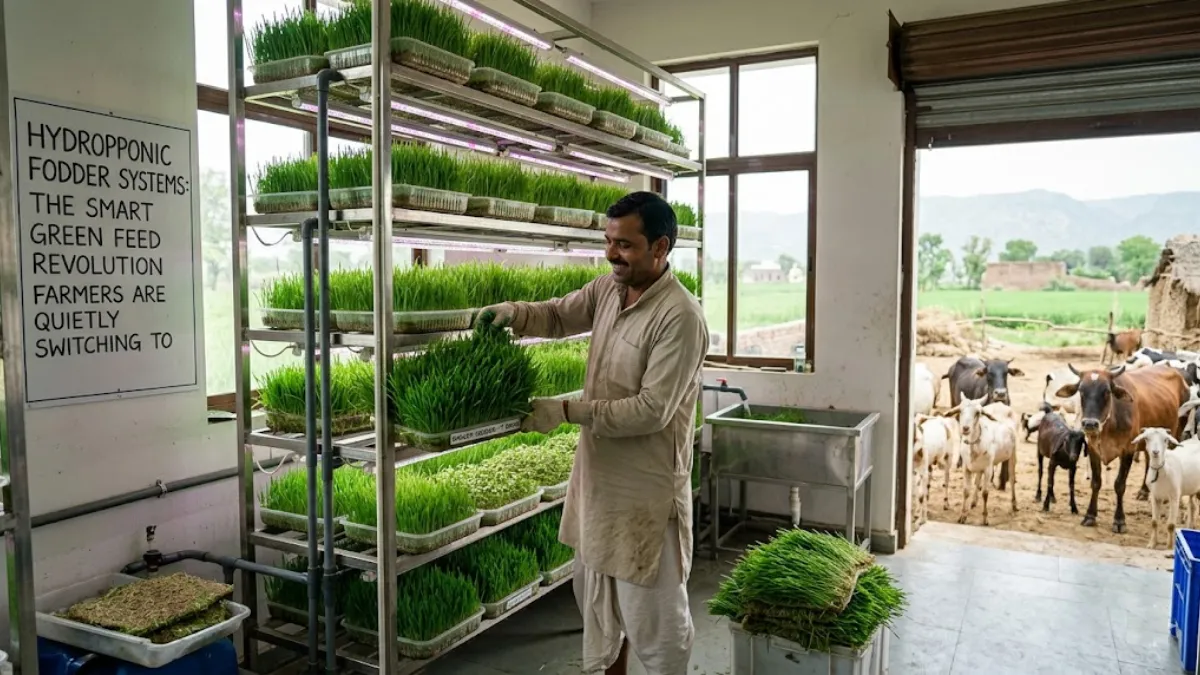
Water shortage. Expensive cattle feed. Unpredictable weather. Farmers everywhere are dealing with it.And honestly, many dairy owners are exhausted.
That’s why hydroponic fodder systems are suddenly becoming popular in small farms, rooftop setups, and even automated dairy units. You grow fresh green fodder without soil. In just 7–10 days. Fast. Clean. Surprisingly effective.Some farmers even say their cows started eating better within days. Milk quality improved too. Not magic. Just fresh nutrition.Let’s understand why this system is getting attention in 2026.
Quick Answer
A hydroponic fodder system is a soil-free setup where grains like maize, barley, or wheat are sprouted into nutrient-rich green fodder using water, humidity, and trays. It saves water, reduces feed cost, and produces fresh cattle feed year-round.Most systems can produce fodder in 7–10 days with very little space.
What Is a Hydroponic Fodder System?
Imagine growing lush green animal feed without fields.That’s hydroponic fodder.Seeds are soaked, spread in trays, and kept inside a controlled environment. Water spraysautomatically at intervals. Within days, thick green mats of fodder appear.Simple process. But powerful.Farmers mostly use:
- Maize
- Barley
- Wheat
- Oats
The roots, shoots, and grains are fed together to cattle, goats, sheep, and buffaloes.And yes, animals usually love it.
Why Farmers Are Switching to Hydroponic Fodder
A dairy farmer from Haryana shared online that during peak summer his green fodder crop completely failed. No rain. Dry land. Feed costs exploded.
He installed a small hydroponic fodder tray unit near his shed.Within 10 days, fresh feed was ready.Not huge quantities initially. But enough to reduce stress. That matters.
Here’s why these systems are growing fast:
1. Saves Massive Water
Traditional fodder farming uses huge water volumes.Hydroponics uses almost 80–90% less water.
Big difference.Especially in Indian summers.
2. Less Land Needed
You can grow vertically using stacked trays.Even a tiny room works.
That’s why many urban dairy owners now explore automated hydroponic fodder systems.
3. Faster Growth Cycle
Normal fodder takes weeks.Hydroponic fodder? Ready in about 7 days.
Fresh every day. Continuous cycle.
4. Cleaner Feed
Less mud. Less contamination.Animals get soft digestible green feed packed with enzymes and nutrients.
Though yes, hygiene still matters a lot.
Hydroponic Fodder System Price in India
Prices depend on automation level, tray count, cooling system, and production capacity.Approximate ranges in 2026:
- Small manual setup: ₹8,000–₹25,000
- Medium semi-automatic unit: ₹40,000–₹1.5 lakh
- Fully automated hydroponic fodder system: ₹2–₹10 lakh+
Many farmers actually start DIY first before investing heavily.
Smart move honestly.
Hydroponic Fodder Tray Price
Hydroponic fodder trays are usually made from food-grade plastic.Average tray prices:
- Small tray: ₹150–₹300
- Heavy-duty tray: ₹400–₹900
Good drainage is important. Very important.Cheap trays sometimes crack quickly under moisture and heat.
How Much Hydroponic Fodder Per Cow?
This is one of the most searched questions.An average dairy cow can consume:
- 8–15 kg hydroponic fodder daily
But it should not fully replace dry fodder or balanced feed.Think of it like a nutritional booster. Not the complete diet.
Experts recommend mixing it with:
- Dry fodder
- Silage
- Concentrate feed
Balance matters.
Best Hydroponic Fodder Seeds
Not every seed works equally well.Popular hydroponic fodder seeds include:
- Maize
- Barley
- Wheat
- Oats
Barley is often preferred because germination is fast and root mats become dense.But availability changes region to region.
Always buy clean untreated seeds. Otherwise fungal problems can happen quickly.
Myth vs Reality
Myth: Hydroponic fodder completely replaces traditional feed
Reality:
No. It supports nutrition but animals still need balanced feed sources.
Myth: It grows automatically without effort
Reality:
You still need hygiene, temperature control, proper seed washing, and water management.
Myth: Only big dairy farms can use it
Reality:
Even small farmers use compact hydroponic fodder tray systems successfully.
Practical Tips Before Starting
Start Small First
Don’t buy a huge automated unit immediately.Test with 10–20 trays.Learn the cycle.
Watch Humidity Carefully
Too much moisture causes fungus.And fungus spreads fast.
Clean Trays Daily
Skipping cleaning for even 2–3 days can damage the whole batch.Smell changes first usually.
Use Proper Ventilation
Fresh airflow improves fodder quality and reduces mold risk.Simple but often ignored.
Hydroponic Fodder System Design PDF — Should You Download One?
Yes. Definitely useful for beginners.A good hydroponic fodder system design PDF helps you understand:
- Tray spacing
- Water flow
- Rack dimensions
- Drainage setup
- Automation basics
But many free PDFs online are outdated now.Try following newer 2026 designs with energy-efficient misting systems.
Internal Links
- Read also: Best Indoor Grow Lights for Plants
- Related guide: Smart Irrigation Systems for Modern Gardening
- You may like: Vertical Farming Ideas for Small Spaces

Written by Editorial Staff Editor
This article was rigorously researched and compiled by our expert editorial team.