Seasonal Management Specialized: Complete Honey Bee Colony Guide for Every Season (2026)
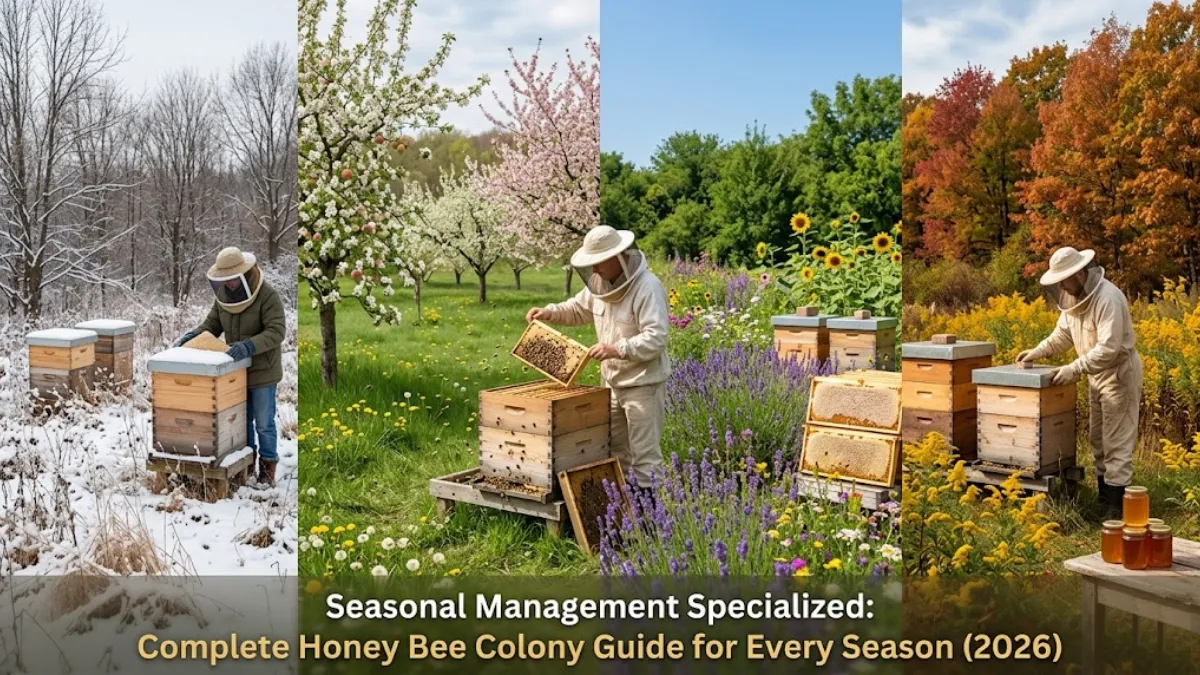
Seasonal management of honey bee colonies means adjusting hive care according to climate, nectar flow, and bee behavior throughout the year. Good seasonal apiary management improves honey production, reduces colony stress, and helps bees survive extreme weather. Small changes. Big difference.
Why Seasonal Bee Management Matters More Than People Think
A beekeeper once said, “Bees usually warn you before disaster.” Honestly. That line stays in mind.Most beginners focus only on honey collection. But experienced beekeepers know the real game starts with seasonal management specialized bee colonies techniques. Bees react differently in summer, monsoon, winter, and flowering periods. Ignore that? Colony becomes weak very fast.Sometimes the hive looks healthy outside. Inside though, chaos.
Temperature changes. Food shortage. Swarming pressure. Pest attacks. Everything changes with seasons.That’s why proper seasonal management of honey bee colonies is not optional anymore.
Spring Season: Colony Expansion Starts
Spring feels exciting for bees. Flowers bloom everywhere. Worker bees become super active.This is the period when colonies expand rapidly. Queen bee increases egg laying. Population rises quickly.What should you do?
- Inspect brood frames regularly
- Add supers before overcrowding happens
- Ensure proper ventilation
- Watch for swarming signs
Many beekeepers ignore swarm cells early. Bad move. A colony can literally fly away within days.
Feed sugar syrup if nectar flow is still low. Simple but effective.
Summer Management Needs Extra Attention
Summer can stress colonies badly. Especially in hot Indian regions.Bees spend more energy cooling hive temperature instead of collecting nectar. You may notice bees clustering outside hive entrances during afternoons. Pretty common.Still dangerous if unmanaged.
Summer Tips for Strong Colonies
- Keep clean water sources nearby
- Provide shade during peak heat
- Reduce hive disturbance
- Avoid pesticide exposure near apiary
One beekeeper in Rajasthan used old wet jute sacks above hive covers. Sounds basic. Worked surprisingly well.
Sometimes old tricks help more than expensive equipment.
Monsoon Season Creates Hidden Problems
Rainy season looks harmless. It isn’t.Moisture buildup inside hive becomes a serious issue. Fungal infections increase. Ants and mites also become active.Colonies may stop foraging for several days. Food shortage starts silently.
During Monsoon, Focus On:
- Hive drainage
- Elevated hive stands
- Regular pest inspection
- Emergency feeding when needed
A weak colony during monsoon often enters winter already stressed. Recovery gets difficult after that.
Winter Management Decides Colony Survival
Winter is survival mode.Bee activity slows. Queen laying reduces. Colonies cluster together for warmth.New beekeepers sometimes open hives too often during cold mornings. That actually harms bees more.Instead:
- Reduce unnecessary inspections
- Keep entrances smaller
- Protect hive from cold winds
- Ensure enough honey reserves remain
Colonies with poor food storage rarely survive long winters properly.
Nature becomes strict during this season.
Myth vs Reality
MythRealityBees manage themselves naturallyManaged colonies still need seasonal supportMore feeding always means stronger hiveOverfeeding can create imbalanceWinter means bees stop working fullyBees stay active inside clusterBigger colonies never failPoor seasonal management weakens any hive
Practical Seasonal Apiary Management Tips
Here’s what experienced beekeepers usually do quietly:
Keep Seasonal Records
Write down nectar flow, queen behavior, disease outbreaks, and honey yield every season. Helps alot later.
Rotate Old Frames
Old combs collect pathogens over time. Replace damaged frames yearly.
Observe Bee Behavior
Sometimes bee sound changes before visible problems appear. Strange but true.
Avoid Overcrowding
Crowded colonies swarm faster. Add space before bees demand it.
Maintain Clean Surroundings
Dirty apiaries attract pests quickly during humid seasons.
Small habits. Huge results later.
Best Resources Beekeepers Search For
Many students and bee farmers search for:
- Seasonal management specialized pdf
- Seasonal management specialized ppt
- Seasonal management of honey bee PDF
- Seasonal management specialized bee colonies ppt
- Apiary management PDF
These resources help in agricultural studies, practical beekeeping training, and apiary planning.
Internal Linking Suggestions
- Beginner’s Guide to Backyard Beekeeping
- Common Honey Bee Diseases and Prevention
- Best Flowering Plants for Honey Bees in India

Written by Editorial Staff Editor
This article was rigorously researched and compiled by our expert editorial team.