Sandalwood (Chandan) Cultivation: Why Farmers Are Calling It “Green Gold”
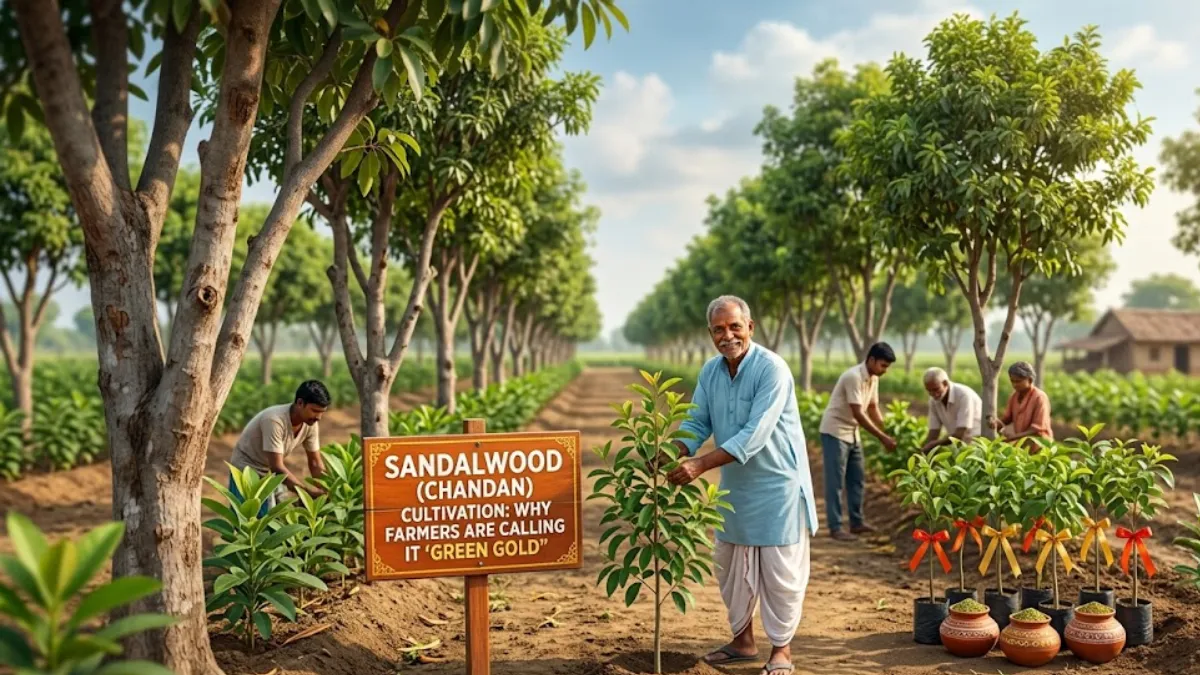
There was a time when sandalwood trees were seen only in forests or temples. Now? Farmers across India are planting them beside mango orchards, coconut farms, even in small 1 acre plots.And honestly. The excitement is real.One mature sandalwood tree can be worth lakhs after 15 years. Sounds unbelievable at first. But many growers in Karnataka, Tamil Nadu, Maharashtra, and parts of North India are already testing this long-term farming model.Still, sandalwood farming is not a quick-rich scheme. It needs patience. Planning too. And yes, legal permissions matter.Let’s understand the real picture.
Quick Answer
Sandalwood (Chandan) cultivation in India can generate very high long-term profits, especially after 12–15 years when trees mature. Farmers can grow sandalwood in 1 acre with proper host plants, government permissions, and security management.The value of one mature sandalwood tree may reach several lakhs depending on heartwood quality and oil content.
Why Sandalwood Farming Is Becoming Popular in India
The biggest reason? Price.Sandalwood is one of the most expensive woods in the world. It is used in perfumes, medicines, cosmetics, incense sticks, carvings, and religious products.Demand keeps increasing. Supply stays limited.That’s where farmers saw opportunity.A farmer from Karnataka once planted sandalwood trees only on the boundaries of his field. Small experiment. Nothing big. After a decade, those same trees became more valuable than his seasonal crops combined. Crazy but true.Now many people are searching for:
- Sandalwood chandan cultivation profit per acre
- Sandalwood cultivation in 1 acre
- 1 sandalwood tree price
- Sandalwood tree price after 15 years
Because the numbers attract attention very fast.
Can You Grow Sandalwood in 1 Acre?
Yes. Easily.In fact, many beginners start with 1 acre sandalwood cultivation because maintenance becomes manageable.Normally, around 400–450 sandalwood plants can fit in one acre depending on spacing and host plants.But here’s the important thing.Sandalwood is a semi-root parasite plant. Meaning it needs support plants nearby to absorb nutrients properly.Common host plants include:
- Pigeon pea
- Neem
- Pongamia
- Casuarina
- Acacia
Without host plants, growth becomes weak. Very weak sometimes.
Sandalwood Cultivation Profit Per Acre
This is where people get excited.A mature sandalwood tree after 15 years may sell anywhere between ₹3 lakh to ₹10 lakh depending on:
- Heartwood formation
- Tree girth
- Oil percentage
- Market demand
- Government auction rates
So theoretically, 1 acre can produce massive returns.But wait.Not every tree becomes premium quality. Some farmers lose trees due to disease, theft, poor maintenance, or low heartwood development.Realistically, experienced growers say sandalwood farming should be viewed as a long-term asset investment. Not yearly income farming.Still, compared to many traditional crops, the future value looks attractive.Very attractive honestly.
How To Get Licence For Sandalwood Plantation
This is one of the biggest questions in India.Earlier, sandalwood cultivation was heavily restricted. But many states have relaxed rules now to encourage private farming.
Usually, farmers need to:
- Register plantation details with forest department
- Maintain tree records
- Follow harvesting and transport regulations
- Obtain transit permits during sale
Rules vary state to state.Before planting, always contact your local forest department or horticulture office. Important step. Don’t skip it casually.
Best Climate and Soil for Chandan Farming
Sandalwood grows best in:
- Warm tropical climate
- 12°C–35°C temperature
- Well-drained red or loamy soil
- Areas with moderate rainfall
Waterlogging is dangerous for sandalwood roots. Very dangerous.The plant likes sunlight. Open areas work better than heavy shade.
Myth vs Reality
Myth: Sandalwood farming makes you rich quickly
Reality:
It takes around 12–15 years for proper returns. Patience is everything here.
Myth: Sandalwood grows without care
Reality:
Young plants need monitoring, irrigation, pruning, and host plant management.
Myth: Every tree becomes worth crores
Reality:
Actual value depends on heartwood quality and survival rate.
Practical Tips Before Starting Sandalwood Cultivatio
Buy certified seedlings only
Cheap unknown plants can destroy years of effort.
Use fencing and security
Sadly, sandalwood theft is real in some areas.
Mix with other crops
Many farmers intercrop sandalwood with turmeric, vegetables, or pulses during early years.
Test soil before plantation
Simple step. Saves future problems.
Keep plantation records
Helpful for legal approvals and future sale documentation.
Internal Linking Suggestions
- Beginner’s Guide to Profitable Tree Farming
- Best Low Maintenance Plants for Indian Farms
- Drip Irrigation Tips for Small Farmers

Written by Editorial Staff Editor
This article was rigorously researched and compiled by our expert editorial team.