The Suicide Tree" (Cerbera Odollam): The Most Dangerous Plant in India
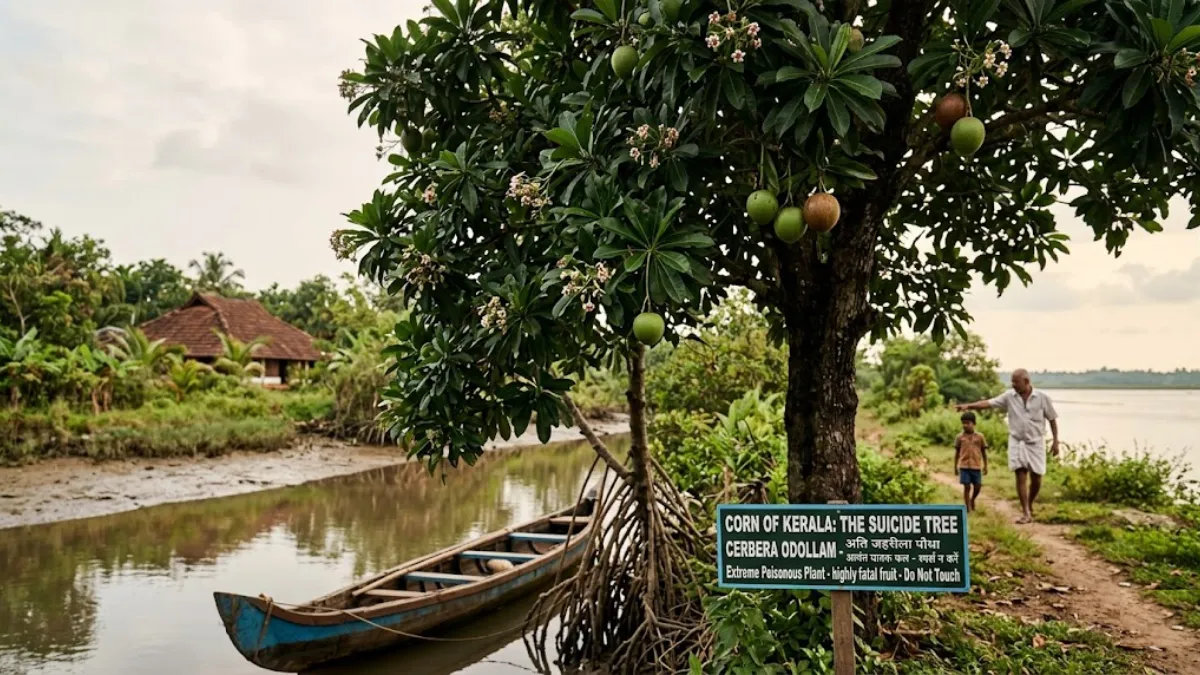
Some plants heal. Some decorate homes. And then there are plants that silently kill.Hidden in the coastal regions of South India grows a tree so toxic that for decades people feared even touching its seeds. Locals called it the “Suicide Tree.” Scientists know it as Cerbera odollam. A beautiful name for something terrifying.And honestly? It doesn’t even look dangerous at first.The tree has glossy leaves. White flowers. Mango-like green fruits. Calm. Tropical. Almost peaceful. But inside the seed hides one of nature’s deadliest poisons cerberin.Yes. One tiny seed can stop the human heart.
Quick Answer
Cerbera odollam, commonly called the Suicide Tree, is a poisonous plant found mainly in India and Southeast Asia. Its seeds contain cerberin, a deadly cardiac toxin that affects the heart and can cause death if consumed.The tree recently gained global attention after people linked it with the HBO series White Lotus Season 3 and searched terms like Cerbera odollam pronounce and Cerbera odollam seeds buy online India.
What Exactly Is Cerbera Odollam?
The plant belongs to the dogbane family. Same family as oleander. Not a friendly family honestly.It grows mostly in Kerala, coastal India, marshy areas, and tropical regions. Historically, it became infamous because the seeds were reportedly used in poisoning cases for many years.Its toxic compound, cerberin, interferes with the electrical impulses of the heart. Heart slows down. Rhythm breaks. Eventually cardiac arrest can happen.Scary thing? Symptoms often resemble natural illness.That’s why the plant remained mysterious for decades.
Why Is It Called the “Suicide Tree”?
The nickname came from reported poisonings in Kerala during the 19th and 20th centuries. According to older toxicology reports, the seeds were involved in many deaths because they were easy to crush and mix into food.Dark history. Very dark.Today, awareness is much higher, and toxicology labs can detect cerberin more effectively. Still, the tree remains one of the most dangerous plants in India.Some people now search online for:
- Cerbera odollam seeds Amazon
- Cerbera odollam seeds buy online India Flipkart
- Cerbera odollam seeds buy online
But purchasing or handling toxic seeds can be risky and may even violate local regulations depending on intended use.
Cerberin: The Poison Inside
Here’s where science enters the story.Cerberin is a cardiac glycoside. Similar in effect to toxins found in foxglove and oleander plants. Once consumed, it disrupts sodium-potassium ion exchange in heart muscles.Simple words?The heart basically loses rhythm.Symptoms may include:
- Vomiting
- Burning sensation
- Slow heartbeat
- Irregular pulse
- Collapse
Medical treatment must happen immediately. No home remedies here. None.Na+/K+ ion imbalance → disrupted cardiac rhythm Na^+/K^+\text{ ion imbalance } \rightarrow\text{ disrupted cardiac rhythm }Na+/K+ ion imbalance → disrupted cardiac rhythm
The Internet Obsession After White Lotus Season 3
Searches exploded after fans connected the mysterious tropical poison references in White Lotus Season 3 with the real-life Suicide Tree.
The White Lotus brought renewed curiosity to deadly tropical plants, especially Cerbera odollam. Suddenly people wanted to know:
- Cerbera odollam pronounce
- Cerbera odollam Sanskrit name
- Whether the seeds are sold online
Pronunciation, by the way, is roughly:
“Ser-BER-ah Oh-doh-LAM”
There’s no widely accepted ancient Sanskrit name officially documented in modern botanical literature, though regional names exist across South India.
Myth vs Reality
Myth: The tree kills instantly
Reality: Poisoning may take hours. Symptoms gradually worsen.
Myth: Touching the fruit is deadly
Reality: Casual skin contact usually isn’t fatal, but ingesting seeds is extremely dangerous.
Myth: Natural means safe
Reality: Nature creates some of the strongest poisons known to humans.
That’s the irony.
Beautiful plants can hide ugly secrets.
What Should You Do If You Find One?
If you live in tropical India, especially Kerala or coastal areas, you may occasionally spot the tree near wetlands or roadsides.
Practical advice:
- Don’t consume unknown fruits or seeds
- Keep children and pets away
- Avoid experimenting with “herbal toxins” seen online
- Contact local horticulture experts for identification
Curiosity is okay. Testing nature isn’t.
Related IndoorPlantify Guides
- Best Indoor Plants for Clean Air
- Toxic Houseplants You Should Keep Away From Pets
- Low-Maintenance Tropical Plants for Indian Homes

Written by Editorial Staff Editor
This article was rigorously researched and compiled by our expert editorial team.